AI BEACON #44 - Who Gets the Customer

The strategic choice is which relationships and business knowledge to own, and which AI execution to buy.
In February 2015, Costco agreed to replace American Express with Citi as its exclusive co-branded card issuer and Visa as its US credit-card network. The card also served as a membership card. The change required transferring a card portfolio attached to an established retail relationship.
In June 2016, Citi acquired and converted the co-branded portfolio; Costco began accepting Visa in place of American Express. Card accounts moved to a new issuer while the retailer kept its membership business. Serving a purchase and giving someone a reason to return were distinct commercial positions.
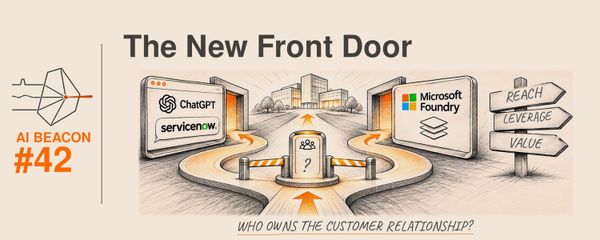
This week's AI commerce developments raise a similar question. OpenAI is offering businesses a way to maintain information and hold optional, labelled conversations inside ChatGPT. A separate Wallet rollout addresses purchasing. Where should merchants build a lasting relationship, and which services should they obtain from partners?
The comparison has limits. Costco already had members and a negotiated card arrangement. Merchants entering an assistant may not control the first interaction. Changing models also brings different quality and integration barriers. Costco's transition establishes neither frictionless switching nor an AI winner; it makes the allocation choice easier to see.
Why This Should Sound Familiar
AI Beacon #12 argued that combining identity, permissions and context could make a surface “the route into work.” Business Hub and optional, labelled Business Agents now offer merchants a version of that route. Recognising the distinction helps separate execution suppliers from customer access. Its commercial weight still depends on incremental repeat demand and the relationships merchants retain.
The Week in Three Moves
- Customer access becomes a clearer strategic choice as businesses gain a presence inside ChatGPT, while direct and rival channels constrain its value.
- Execution can be divided between model roles, but workload intensity can reverse the apparent infrastructure advantage.
- Scientific computing access and structured research workflows advance separately; useful capacity must still become credible results.