AI BEACON #37 - The Cost of Done
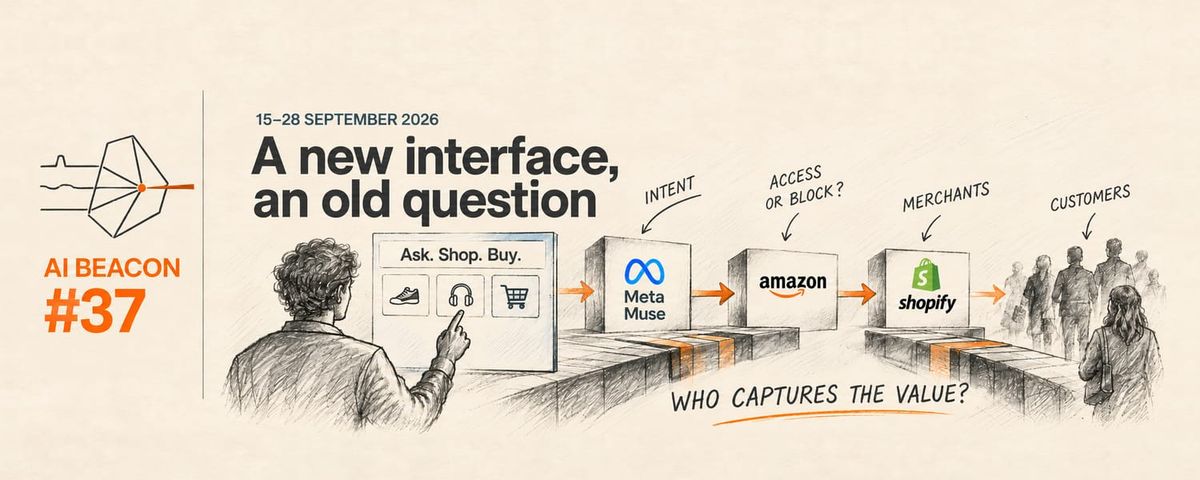
Lower task-cost claims meet tighter action boundaries and leave buyers to measure the cost of accepted work.
Anthropic’s Sonnet 5.5 arrived on 28 September with unchanged token prices and a claim of up to 30% lower cost per task in its own tests. In the same week, Glean added scheduling for manually configured agents while disabling a Google Sheets writing skill and a Composio document-copy action. The first is a claim about task efficiency; the second is a set of product decisions about usable actions.
These are different kinds of evidence. Anthropic’s task-cost result is vendor-tested, and Glean’s withdrawals concern those named capabilities, not all writing or copying. They nevertheless sharpen the same buyer question: what must happen between generating an output and accepting the result? A lower model bill matters, but it cannot by itself answer who checks the work, handles a failed action or pays for correction.
Why This Should Sound Familiar
In AI Beacon #31, we suggested that value could accrue to operators able to prove each handoff through to the workflow outcome. This week makes acceptance more concrete: Glean withdrew two named capabilities, while Harvey describes reviewable Word edits. Who captures any resulting savings remains unresolved. AI Beacon 31
The Week in Three Moves
Work stays in the record. The emerging pattern runs through familiar work practices: previewed Word changes and probation transcription. For buyers, integration should be assessed alongside the ability to review and accept the output. A feature description and a rollout each answer only part of that question.
Proactivity needs an owner. A one-company qualitative study describes remedial work after proactive interventions. Its authors’ recommendation to expand autonomy with trust makes correction ownership a practical design choice. The study does not establish a productivity effect across organisations.
Savings must survive acceptance. The next useful comparison ends when work is accepted. Will lower model costs still hold after failures, review and rework are counted? That unresolved result should shape the purchasing decision.